19 June, 2013

Hadrian's Timber Wall; Reverse engineering a Roman rampart in Google SketchUp

Caesar’s account of the war in Gaul contain over forty references to ramparts, some native, but mostly those built of timber with a ditch in front constructed by his army in the field. [1] I have argued that the three lines of double postholes with a ditch in front to the north of Hadrian Wall represent such a rampart.
Recently, I have been trying out Google SketchUp as tool to explore the engineering of this structure, and express structural ideas visually.  In a previous article I have discussed the issues of visual representations of the past, as distinct from models and diagrams.

CAD and the Archaeology of postholes
I bought my first CAD system in 1990, using it for my work in Essex, and subsequently offered my services to all the archaeological units and trusts working in England at the time; there were no takers.
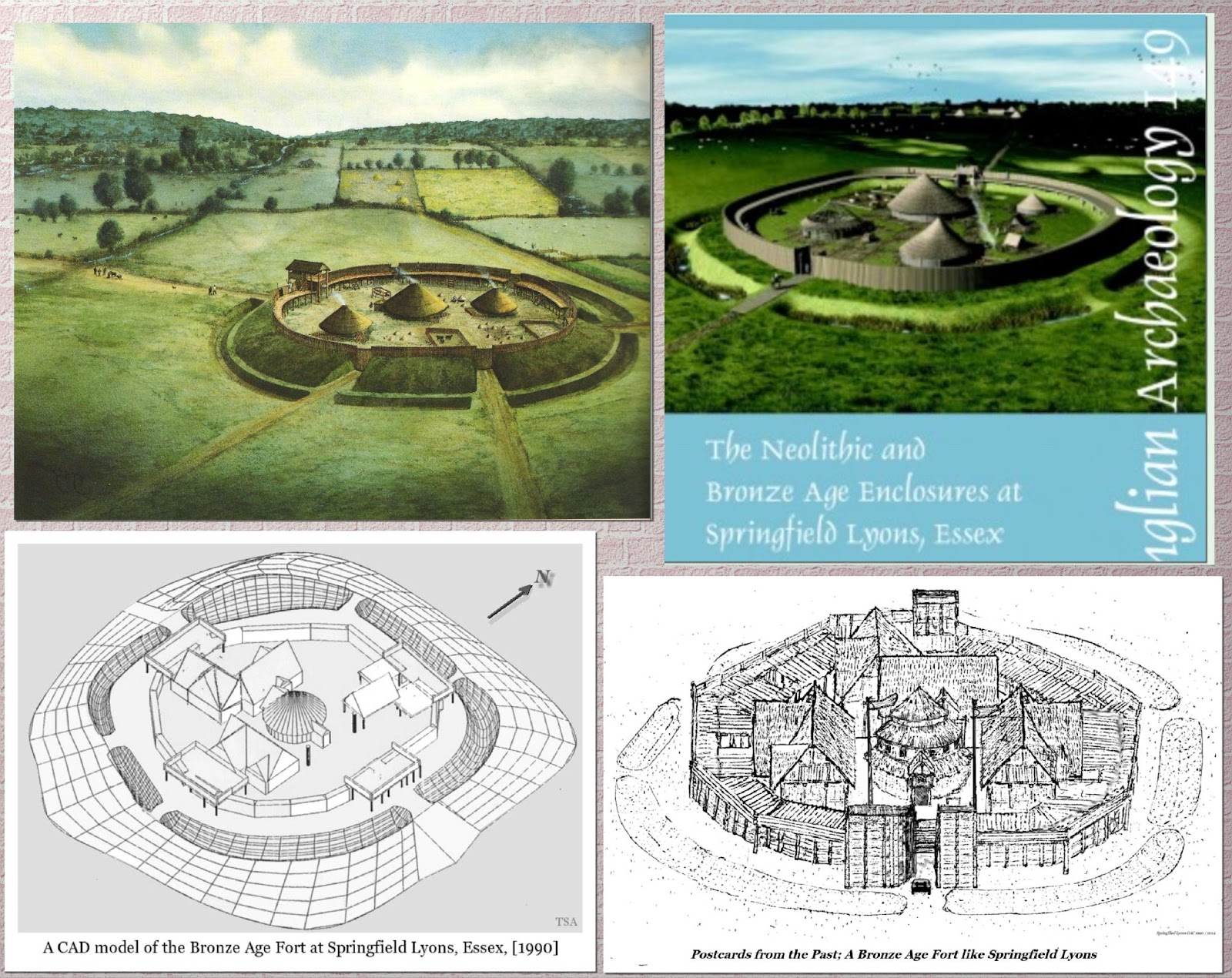
However, I had also realised that as a tool in my attempts to understand the evidence of prehistoric posthole structures, CAD was not yet the answer.  It was not just that it was slow, a 486DX 25 MHz computer running at would take 12 hours to print a shaded view, but even more critically, putting a cone on cylinder and calling it a roundhouse did not advance my understanding, it was simply an aid to drawing more accurate ‘artistic’ reconstructions.
My 1990 CAD model of The Bronze Age Fort at Springfield Lyons Essex [2]

As soon as you start to model on a structural timber by timber basis a detailed understanding of how the horizontal elemental articulate with the posts is required.  At the time, the aims of my research were gaining a systematic understanding of this relationship in archaeological buildings and structures.  In short, I returned to tackling the problem using paper and pencil, working in plan, section, and elevation, which allows you to models ideas and find they don’t work, much more quickly.
Modelling and analysis in order to understand complex data is at this level is a process of exploration and elimination; it is a jigsaw without a picture, where some of the pieces may or may not be missing.  My ‘research’ consists of hundreds of scale drawings, all of which have proved to be wrong.  However, having eventually found things that worked on paper I decided to do a PhD at Newcastle, only to discover they had thrown their CAD system away.
Thus, after a certain amount of unpleasantness and mendacious duplicity, Theoretical Structural Archaeology became a child of Google, which by remarkable technical serendipity has always provided the tools required.
Google SketchUp  is a 3D modelling software, available free, which now has sufficient facility to do the things I need to do at present, and after a month of trying to do things quickly I have worked out how to do things properly; there are still limitations, both in my ability and the software, but we have reached a workable compromise!
The Archaeological Context
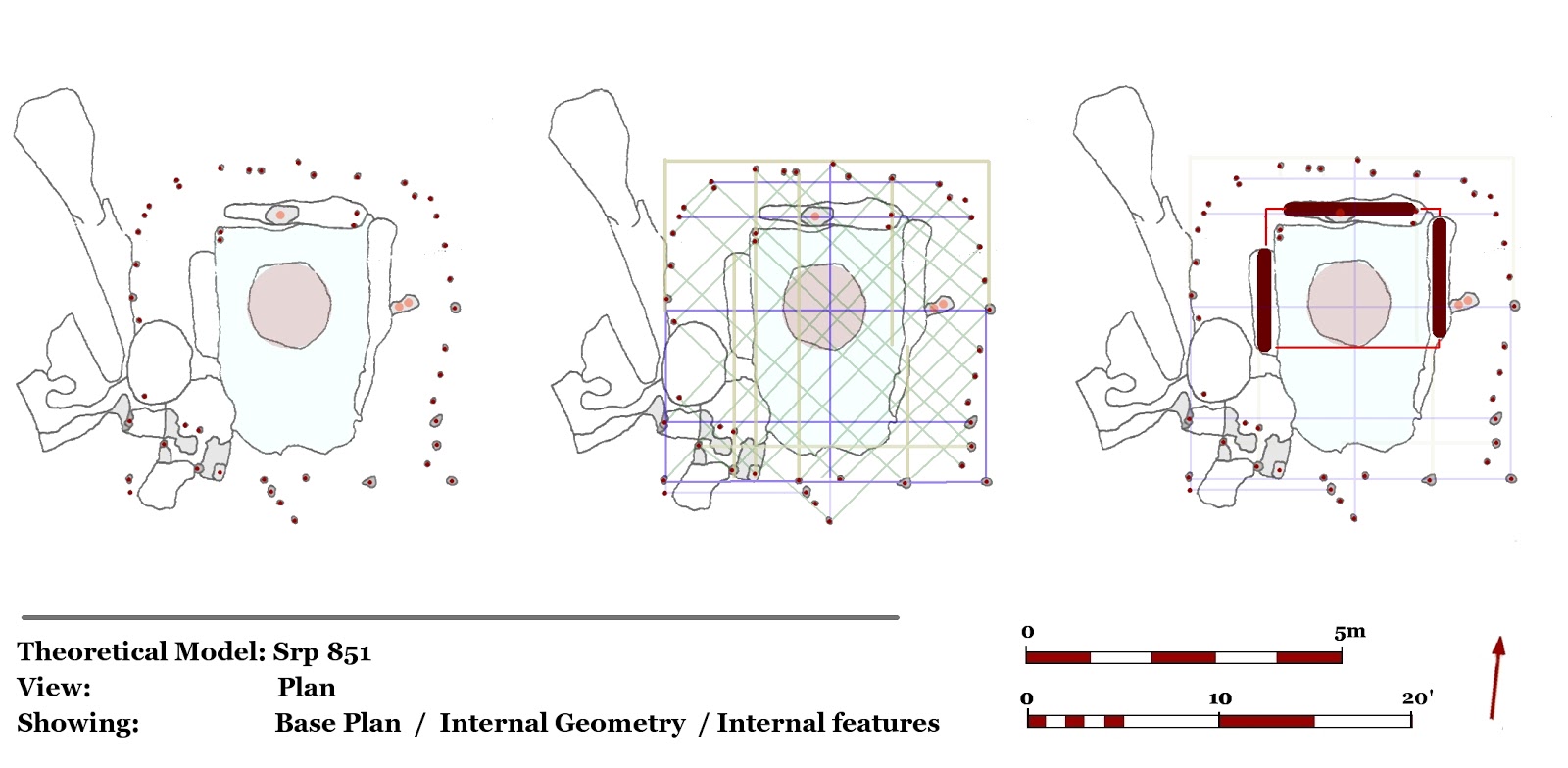
The model is based on the plan of the postholes recovered from berm between Hadrian’s Wall and the ditch at Shields Road, Byker, a suburb to the East of Newcastle. [3] This comprises or three rows of double postholes, with the central pairs at 90 degrees to the other two lines. [Below].
My initial modelling of this and other similar evidence was on paper, and later with a matchstick model, indicated that this was a timber rampart, which along with ditch formed the initial phase of the frontier while the stone Wall was under construction.

The technique of rampart building is frequently discussed by Caesar in his account of the Gallic wars, and was a very standard procedure for troops, as discussed in Epitoma rei militaris [4], although the key insight comes from Polybius Histories [5] [Discussed here]. Caesar’s standard rampart  is made from timber 12 feet high, with a ditch in front, it probably had wattle battlements and a parapet of sharpened branches. There are also frequent towers, and galleries are mentioned, allowing defenders to concentrate their fire from more than one fighting platform.
The structures at Shields Road and Buddle St, [3] appear to be laid out in Roman feet; I always prefer to work in ‘Imperial’ on ancient structures, and make no apology for this as they patently make no sense in metric.

Aims and Objectives
The purpose of the model is to test the basic engineering principles deduced from the plan and section data, in particular to produce a better technical representation of how a rampart might be constructed around the particular spatial distribution of the posts evidenced at Shields Road.
Methodology
The model is built timber by timber, starting by placing posts in their recorded position on the archaeological plan.
The theoretical horizontal elements are then added in layers of similarly aligned components, fitted around the vertical posts. The model is set on a surface 2’ above the archaeological plan, with a restored ditch and spoil banks providing a broader context for visualisation.

A selection of timber baulks and posts were prepared as components, based on the diameter trunks indicated by the posthole sections, up to 10" / 25 cms. [Below]   These are around 25 cm in diameter and taper, ending with a nominal point. Ranging in leant from 24‘ for the longest posts to 14’ for the standard posts, with the baulks forming the body of the rampart 10 – 12’ in length.

In addition, some more twisted branches were created to simulate the parapet.
Finally, wattle panels for the battlement were created. These are quite detailed and probably require as much processing power as the rest of the structure.
These components were fitted into the spaces between the posts in the patterns previously identified; that is at angle, perpendicular, or parallel, to the face 
Differing textures and slight variations in size were used systematically to help distinguish the layers.There is no particular indication as to in what sequence was used, but for clarity I placed diagonal baulks at the bottom, and the regular ones at the top of the rampart.

This has the advantage of emphasising the projecting parapet, but exposes the posts which are obscured by the ends of diagonal baulks.  A mix of diagonal and regular baulks throughout would be probably the most advantageous method as it would help keep the body of the rampart level.  It was decided not to place baulks parallel and in front of the posts, as these would be easily dislodged.

As layers of timbers were fitted around the posts, some variations occur due to there being a range of possibilities and a degree of latitude in the placing of some of individual pieces.

The rampart model
The model is based on the use of the spaces between the posts to create an impenetrable and unbreakable barrier, how to fill these spaces is to some extent self-evident, but does not address in detail what happened at the head of the posts.
In a model of a post built building this would be the crucial analysis, but in a temporary military structure it less significant to the understanding the structure as a whole. The extent to which joinery, and or iron nails, would have been used impacts on how the tops of the posts are modelled. The upper fighting platform is supported on beams between selected pairs of posts which illustrate how this could be achieved.
It does illustrate the advantages of the projecting diagonal baulks which help hold the post in place and prevent the attacker getting any purchase on it to pull it out.                 


As already noted, the model does not address the issue of taper; if all the timber tapers towards the front, the body of the rampart will slope down in that direction; it simple to address in the [real] construction process, but would have added to the visual complexity. This returns us to issue of visual representation; in my initial #1model, I had tried to create a more realistic and random looking structure, but this detracted from the central purpose of demonstrating the engineering principles.
The efficiency of the model could be further improve by using thinner baulks or shorter which might be fitted into the tighter gaps.  Indeed one of the more interesting aspects of the structure are the bits that don’t work very well, as they are the key to further understanding.  Shields Road is 16m sample of a structure with about 50 posts per 10m, and while other evidence from elsewhere confirm the presence and regularity of the postholes [3], there is as yet insufficient data to fully understand the pattern.

Looked at terms of foraging Woodland resources; the longest straightest ‘building’ timbers, and baulks split from larger trees would be used for the posts, the scale of which clearly determines the scale of the rampart.
The body of the rampart would presumably utilise the larger heavier timber towards the bottom, with lighter thinner baulks, even bundles of sticks, used higher up, where they are less lightly to be dislodged. The thinnest saplings and be used for the wattles, to form battlements and hoardings,  while the irregular wood from the side branches and crowns can be used to form a parapet to prevent climbers.
This type of design is very flexible and adaptable to circumstances, and would, for example, have required stairs to reach the fighting platform, as well as other specific adaptations to suit differing circumstances. Fresh cut timber does not burn readily, and its inherent irregularity and branch stubs would aid interlocked nature of the structure. 

While what remains are stone forts and walls built by the Roman army, in many ways these are exceptional; what the army normally did was build timber temporary structures, which could withstand the prolonged attack of a determined enemy, and there can surely be little doubt that these postholes at Shields Road and elsewhere north of the wall are the foundation of such rampart.


Conclusions – Google SketchUp as a tool of the structural archaeologist

In reality I found the process time consuming, fiddly and frustrating; any joy of realising an ideas in virtual 3D, was offset by the seven complete rebuilds that are an inevitable part of the learning curve.
However, it in my particular technical circumstances is a perfectly viable tool; now that I am learning how to use it efficiently, I am looking forward to tackling more complex issues such as post built buildings. The ability to photo-texture components is helpful, and a high degree of ‘realism’ can be developed by introducing a greater number of individual components as variants.  

I am confident that I will be able, with patience, to use SketchUp to build 3D models of the archaeological buildings I have been discussing and illustrating in plan and section.  Beyond this, the wider potential of Google SketchUp to share and distribute this information is extremely exciting.

References and further reading

[1] Caius Julius Caesar "De Bello Gallico" and Other Commentaries English translation by W. A. MacDevitt, introduction by Thomas De Quincey (1915) http://www.gutenberg.org/etext/10657
[2]   http://unlockingessex.essexcc.gov.uk/uep/custom_pages/monument_detail.asp?content_page_id=89&monument_id=19643&content_parents=48,175
[3] Grey literature: Shields Road, Newcastle, Phase 2b, archaeological excavation. TWM archaeology 10/2006
See also;  Bidwell, Paul T.; Watson, Moira. 1989 'A Trial Excavation on Hadrian's Wall at Buddle Street, Wallsend'. Archaeologia Aeliana, 5th ser., 17 (1989), 21-28.
And
 T. Frain, J. McKelvey & P. Bidwell 2005 Excavations and watching brief along the berm of Hadrian’s Wall at Throckley, Newcastle upon Tyne, in 2001-2002. Arbeia J, And Bidwell, P T, 2005 'The system of obstacles on Hadrian's Wall; their extent, date and purpose', Arbeia J, 8, 53-76. http://www.arbeiasociety.org.uk/journal.htm
Grey literature; Throckley, Newcastle upon Tyne, archaeological excavation and watching brief. TWM Archaeology 12/2003 
[4] The Military Institutions of the Romans (De Re Militari) by Flavius Vegetius Renatus, Translated from the Latin by Lieutenant John Clarke, translation published in 1767.   Etext version by Mads Brevik (2001)
http://www.pvv.ntnu.no/~madsb/home/war/vegetius/
[5] http://penelope.uchicago.edu/Thayer/E/Roman/Texts/Polybius/18*.html#18 

07 June, 2013

Professor Wallace-Hadrill interviewed about Herculaneum at Ideas Roadshow

Theoretical structural archaeology is about understanding the evidence of ancient built environments, and previously I have written about the importance of those sites ‘frozen in time’ by some disaster preserving buildings and content in situ.
For the Roman world, Herculaneum and Pompeii give us that unique insight, a level of detail, unimaginable in conventional archaeology, which has become central to our understanding of the period.  While we are familiar with plaster body castes, dramatic reconstructions, and looming clouds of volcanic death, quite what this really means to archaeology, archaeologists and everybody else is a lot more complex, nuanced, and interesting.

A Serous insight into the archaeology of the built environment [and why it’s important].
In the latest edition of Ideas Roadshow, Howard Burton gives us an extraordinarily insightful interview with Professor Andrew Wallace-Hadrill about the world of Herculaneum present and past.  This is a subscription service, so they want your money, but in return they offer an opportunity to spend quality time with interesting people talking about what they know best.  Professor Wallace-Hadrill effortlessly blends the latest insights into the archaeology, with its long and complex relationship with local society, down to the present day issues of conservation, presentation, and exploration. [This is a Preview - but at the moment you can watch it for Free!].
While the individual problems of the site are those familiar to most archaeologists in some form, the scale and range of issues at sites like Herculaneum make it something of  a macrocosm for archaeology as a whole; it is the subject at its most potent, complex, and deeply entangled in the wider issues of society.  If archaeology is to endure in these difficult times, it is important that what archaeologists do in the widest sense, as well as how they think, is readily available to be understood at a level beyond that of the average the television documentary. 
The Ideas Roadshow is presented in an interview format, so you are obliged to listen and think about what is being said without the distraction of images or the need of a visual narrative.   I enjoyed it for free, it presented a rare opportunity to get an insight into not just Herculaneum, but also archaeology on an executive level, where it is very “real”, and concerned with contemporary issues.  The Professor is an archaeologist with passion, and he is intelligently and unobtrusively interviewed about things that I found interesting, but this is not a review, just a recommendation. 

Picture credit;  

30 April, 2013

Hadrian’s bridging of the North Tyne

PreviouslyI have discussed the evidence for a temporary timber and earth rampart with associated infrastructure which necessarily predated and facilitated the construction of Hadrian’s Wall in stone, it follows that there was probably a temporary bridge where it crossed the North Tyne at Chollerford, [Chesters].

In addition, unlike a timber bridge built on piles, the construction of a Stone bridge also requires significant temporary works, which are evident from the air.

28 March, 2013

Hadrian's Ghost Wall

The key to understanding Hadrian’s Wall is that the Romans built a temporary frontier of wood in the East, and wood and earth in the West, to protect them while they constructed the permanent stone frontier. It follows that there would also be temporary forts and other structures amounting to a whole ghost timber and earth version of Hadrian’s Wall.

15 March, 2013

Red Nose Archaeology


Today is red nose day - for Comic Relief a charity event organised by British comedians.
Archaeology is one those subjects traditionally associated with drinking, it was one of the few compensations for low wages, poor working conditions, and zero career prospects, although quite why well paid academics should be red noses has never been fully explained.

27 February, 2013

Understanding the Neolithic Longhouse


Archaeology is recorded in diagrams
All pictures of a Neolithic Longhouse are imaginary; generally, all that remains are the archaeological plans of their foundations, however, it is possible to produce a theoretical model of the form of engineering that fits the nature of this data.
Prior to the advent of digital recording systems large amounts of information were routinely recorded by visual representation in the form of hand drawn plans and sections.  Structural archaeology takes these diagrams and extends them into a ‘theoretical’ three dimensional space; in some respects these models are as accurate as the original plan.
Theoretical structural archaeology is theoretical because it based on measurements and ideas that can be expressed as diagrams and models which are the best fit for an imperfect data set.  This fit tends to improve with further study and this article represents an updating of my previous articles.

18 February, 2013

The North South Divide


On a day that our Deputy Prime minister Nick Clegg has talked about rebalancing the North South economic divide my friend and fellow blogger Michael Anderson has very kindly posted a joint article about the Wall.
Mike Anderson's Ancient History Blog looks at the ancient world in terms of what the past teaches us about the present. I rather stole Michael’s thunder and wrote about Geography of the North South divide, and it’s resonance through history.
" . .Emasculating the north and overburdening the south .. . “
Deputy Prime minister Nick Clegg.

13 February, 2013

Doubt, and the archaeology of the imagined past.

 One thing that was apparent at the CAA conference [Computer Applications in Archaeology]  at Southampton, was the ability of our current technology to produce any image we can imagine with a remarkable degree of realism.  The look of the past, the shared visual culture, is commercially important to the entertainment industry, and in some senses is the end product offered to consumers of archaeology as infotainment.  As a structural archaeologist, while I am groping towards an understanding of how a Neolithic longhouse was engineered, the one thing I am certain of is that I don’t know what a building ‘looked’ like.
So, given the ability to visually express anything we can imagine - how do we express doubt?

21 December, 2012

Inside the mind of a New Archaeologist

In my view, the inability of conventional archaeology to interpret the majority of the excavated evidence from prehistoric sites, in particular postholes, has led to development of “New” archaeology, where academics study and become experts in those aspects of culture we don’t find.  In those countries like Netherlands and Germany, where they understand their archaeology, their narrative of the Neolithic is generally  about agriculture, while in Britain it is more often expressed in terms of the perceptions, beliefs, rituals, personhood, and cosmologies.

31 May, 2012

TSA at CAA2012

The highlight of my year so far was being invited to give a paper at the 40th Computer Applications in Archaeology conference hosted by the University Southampton .  Firstly, I should thank James Miles for inviting me,  my parents for funding it, and the University for Southampton  for putting on a tremendous conference; it has restored my faith in academic archaeology.

This is the abstract of my paper;

Over twenty years ago, I bought a computer and CAD software, only to discover that it took hours to print a shaded view of an Iron Age roundhouse, and besides, sticking a cone on top of a cylinder did nothing to advance my understanding of the archaeology of prehistoric timber buildings. So I returned to the basic data and to working on paper in plan, section, and elevation.
Prehistoric structures in Britain are largely evidenced by postholes, often in such numbers, that most archaeologists are content to pick out circles and rectangles on which to base their report, and ignore the rest of the dataset.  However, thinking about structures in terms of ’shape’ has led to simplistic models and inappropriate cross-cultural comparisons.
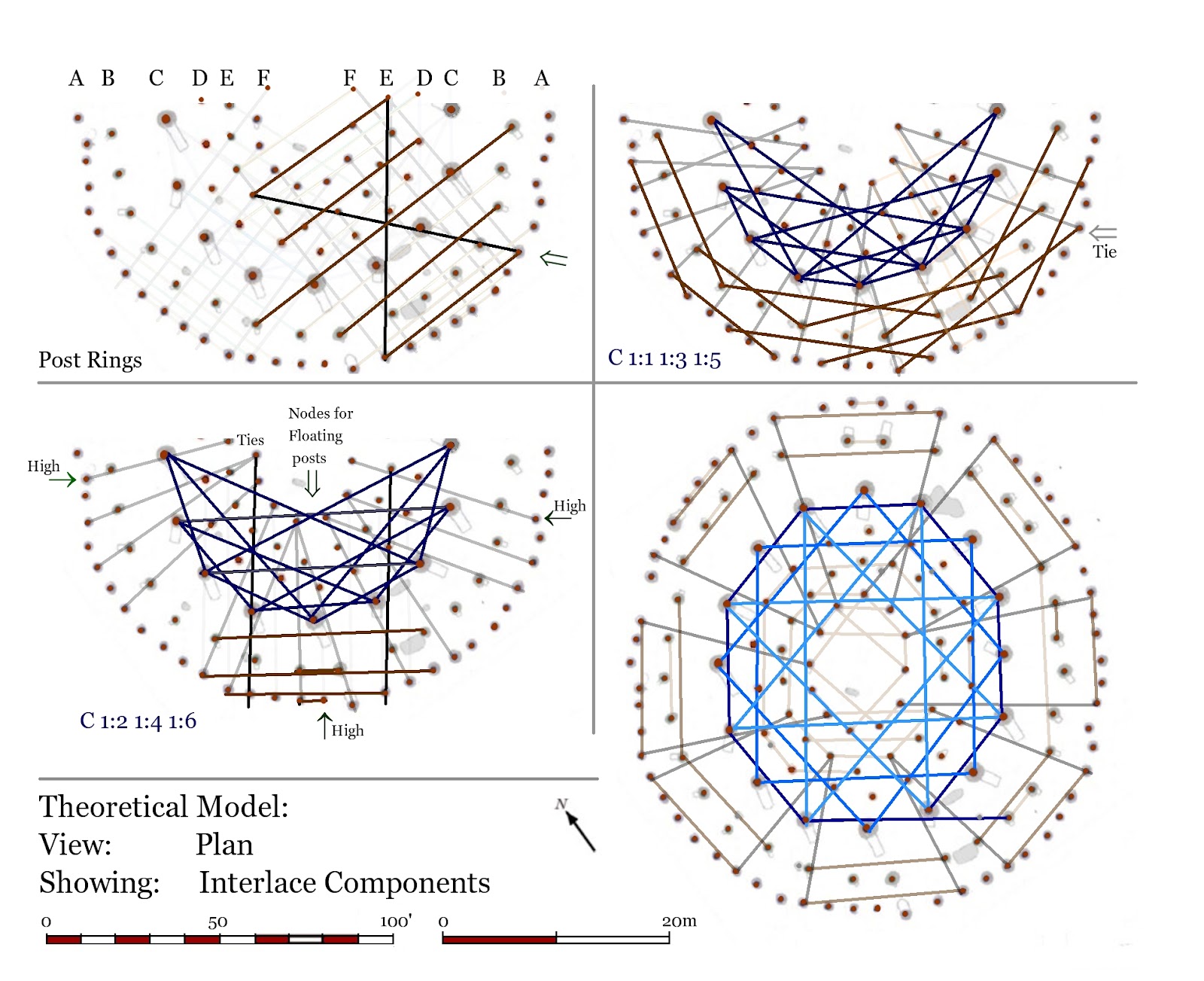
My research into understanding postholes has concentrated on reverse engineering timber structures from the known position of their posts, which ultimately leads to a consideration of how timbers were joined together.  Initially, I worked back from the medieval period, but more recently, I have worked forward from LBK buildings, which are the starting point for the range of technologies that both require, and support, complex built environments.
Modelling the relationship between an archaeological ground plan and the original superstructure requires a detailed consideration of tools, carpentry, building technology, and trees. It leads to ideas like offset jointing, reversed assembly, and importance of ties, unfamiliar concepts to most archaeologists.  However, with such ideas comes a basic set of principles that both explain the spatial distribution of archaeological features, and are a guide to the use of CAD to reconstruct and understand prehistoric architecture on a timber-by-timber basis.
Understanding the basics of posthole archaeology, and the technological culture it represents, unlocks the potential of CAD systems a research tool, making it possible to reconstruct buildings from LBK longhouses to Woodhenge in virtual reality.

As far as I could tell it when in the room, - nobody threw anything or walked out, and more generally delegates  coped fairly well with my enthusiasm for my  subject.  Encapsulating twenty years of research in 20mins was never going to be easy.
The quality and range of papers was excellent, and in some ways quite overwhelming, illustrating the application of IT to wide range of research going on throughout the world.
In stark contrast to my own recent experiences of academic archaeology, I was very impressed with all aspects of Southampton University, particularly by their ability to create research groups across departments, utilising knowledge and technology from a range of disciplines.
Particularly  gratifying was the emphasis on evidence based archaeology, everyone I met among this gathering of international archaeologists seemed to share my view that making up cosmologies, beliefs, and rituals was not an appropriate methodology for explaining complex archaeological datasets.
So, once again I would like to thank the staff and students at the University of Southampton  for their hospitality, and for what it is worth, I would heartily  recommend it as a place to study archaeology.


23 March, 2012

Twelve reasons why Stonehenge was a building

Stonehenge was a building.  That’s it, no mystery. If it was a rectangle this would not be an issue, but British Prehistoric buildings are predominantly circular from this period onward. 
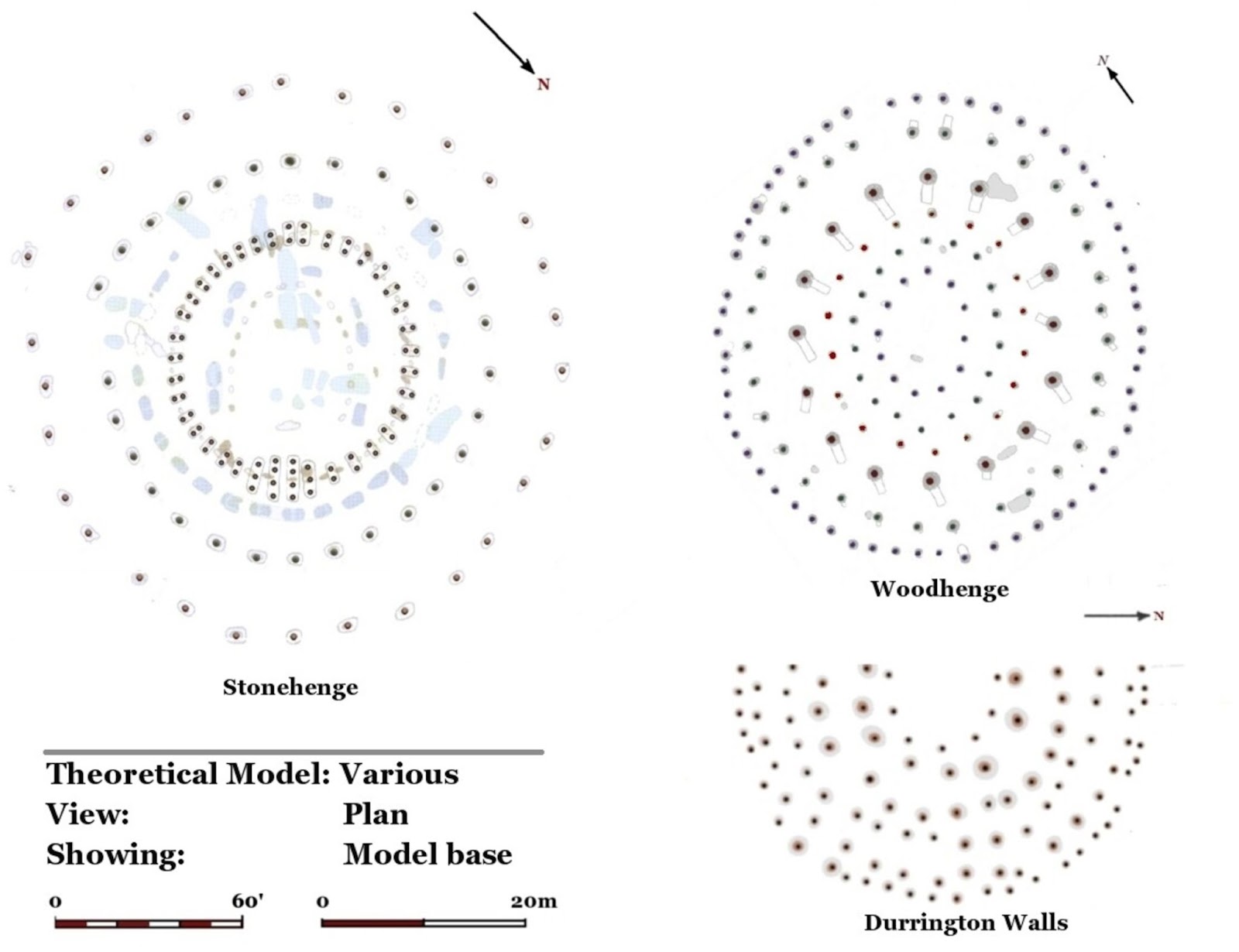
The rings of postholes at Stonehenge [Y, Z, Q, and R holes] are often ignored, or are thought to be redundant stone holes, but it is just one of a group of concentric timber structures known from various periods in British Prehistory.  Like Woodhenge, Durrington Walls, Mount Pleasant, and The Sanctuary, Stonehenge was a large timber building.  This was tentatively recognised by Tim Darvil in 1996, who called them Class Ei structures.[1]  

14 March, 2012

Exciting developments at Flag Fen


As a rule, this site is about my own research into the archaeology of the built environment, but I was asked if I could do my bit to aid a new project at Flag Fen; since this is one of the most important sites the country, I am happy to oblige, and I am sure readers may also want to help support this project.
I have written about the international importance of sites like Biscupin and Vindolanda, and Flag Fen ranks among these, and now there is an opportunity to get involved, make a contribution, and experience real archaeology.   

22 February, 2012

Hadrian's First Wall - Free download


I am making my research into the earth and timber phase of Hadrian's Wall, covered in the previous three posts, available as a convenient electronic or printable copy. 
Since this amounts to 12,500 words, with 48 of illustrations, it is perhaps too cumbersome to work well as an on-line article.  I hope this may prove useful to those readers who interested in the archaeology of this period.  Please feel free to distribute it as you think fit.

Hadrian’s First Wall


24 January, 2012

Hadrian’s First Wall Part 3 of 3

On Tyneside, between Hadrian’s Wall and the Ditch to the north, archaeologists have found three lines of double postholes, which, it is argued, represent an early Timber Wall, that along with the Ditch, formed part of a temporary frontier while Hadrian’s Wall was being built. Further, it is argued that the Turf Wall represents the continuation of this structure in the western sector of the Wall. In addition, when the engineering and layout of the Vallum is examined, it appears to be an unfinished road, probably abandoned when warfare interrupted work on the Wall. These insights into the archaeology of Roman military engineering are the key to a new understanding how and why Hadrian’s Wall was built.


An updated summary of a series of articles from this site on the timber and earth structures predating Hadrian’s stone Wall.


Presented in three parts:


3. The Construction of the First Wall

Hadrian’s First Wall [Part 2 of 3]

On Tyneside, between Hadrian’s Wall and the Ditch to the north, archaeologists have found three lines of double postholes, which it is argued, represent an early Timber Wall, which, along with the Ditch, formed part of a temporary frontier while Hadrian’s Wall was being built. Further, it is argued that the Turf Wall represents the continuation of this structure in the western sector of the Wall.  In addition, when the engineering and layout of the Vallum is examined, it appears to be an unfinished road, probably abandoned when warfare interrupted work on the Wall. These insights into the archaeology of Roman military engineering are the key to a new understanding how and why Hadrian’s Wall was built.
An updated  summery of a series of articles from this site on the timber and earth structures predating Hadrian’s stone Wall.
Presented in three parts:
2. Reverse engineering the Vallum

Hadrian’s First Wall [Part 1 of 3]


On Tyneside, between Hadrian’s Wall and the Ditch to the north, archaeologists have found three lines of double postholes, which it is argued, represent an early Timber Wall, which, along with the Ditch, formed part of a temporary frontier while the Roman Wall was being built. Further, it is argued that the Turf Wall represents the continuation of this structure in the western sector of the Wall.  In addition, when the engineering and layout of the Vallum is examined, it appears to be an unfinished road, probably abandoned when warfare interrupted work on the Wall. These insights into the archaeology of Roman military engineering are the key to a new understanding how and why Hadrian’s Wall was built.

An updated  summery of a series of articles from this site on the timber and earth structures predating Hadrian’s stone Wall.

Presented in three parts:

1. The Timber wall


21 December, 2011

The construction of Hadrian's First Wall

It is now over two years since I published the analyses of the three lines of double postholes found on the berm north of Hadrian’s Wall.[1] I knew then that this was the foundation of a temporary timber rampart, and that these least visible of its features were the key to explaining Europe’s largest archaeological monument. However, more research has subsequently clarified the issue further, and understanding the engineering of the ‘Vallum’ behind the Wall has thrown further light on the sequence of construction.

14 November, 2011

Archaeology, wood, and dog walking

When I need to think about what to write next, I go and see my friend Daisy, and we go for a walk in the woods. She is a very good listener, but gets impatient with my interest in the trees, as hers mainly involves games with a stick. Thinking about trees is the basis of much of my research about archaeological structures, and for Daisy, sticks are the fundamental part our shared culture. Throwing sticks, in some form or other, is an important and fundamental human skill; as a retriever, Daisy enjoys the chase and hunt for the stick. Possession of the stick is the object of the game.
Each tree we pass can be viewed as a source of material for a whole variety of cultural artefacts, but you have to concentrate on Daisy, or you will miss her hiding the stick for you to find. Our wooden heritage is usually almost invisible to the archaeologist and lost to posterity, leaving us to conceive of the past in terms of tools, rather than product or materials. When the stick becomes lost or stuck in a tree, Daisy will locate a suitable fallen branch and attempt to break off a suitable piece so we can continue the game; Daisy is a tool-making dog.

08 November, 2011

Archaeo-toons; Secrets of Stonehenge Special

It is not that writing a book is boring, or that I am looking for displacement activities, it's just that I have pencils and paper that I have to use up before they reach their sell by date.

Stonehenge Festival

01 November, 2011

Archaeo-Horror

Starting the book today - but just time for some seasonally unpleasant Humour: 


There is nothing more horrific than realising you are the only sane one left; here are some special offers from my imaginary friends over at UTPress.


Seasonal Monster Book Sale - Prizes Slashed and Burned

University of Tyneside Press
Ancient Insights Series

30 October, 2011

Book Deal!

I am uncommonly pleased to announce that a contract for the preparation of a publication has been cordially agreed between Amberley Publishing of Stroud and myself.
The book, currently titled The Archaeology of Postholes: Reconstructing Prehistoric Buildings, will have 60,000 words, with 130 illustrations, and while advance order lines will be waiting to take your call, I’d give it a couple of weeks, as I haven’t written it yet.
Many thanks to Miles Russell for his good offices.
This is the basic synopsis for the book which I developed last February. It will cover many of the topics covered so far on Theoretical Structural Archaeology, but with a linear rather than episodic narrative structure, and it will require a new set of black and white illustrations.

27 October, 2011

Archaeo-toons

Another bout of compulsive cartooning has been brought on by more bad news on the work front, as another light at the end of the tunnel blinked out; leaving me alone in the dark, with a pencil....
Out and About

13 October, 2011

Vitruvius on Trees

Marcus Vitruvius Pollio, better known as Vitruvius, is one of those rare individuals from the ancient world whose thoughts and ideas have survived him. He was a contemporary of Julius Caesar, and wrote the only significant surviving book about Roman architecture. His book, De architectura, known as The Ten Books on Architecture, is dedicated to emperor Augustus, and provides a unique insight into the thoughts and perceptions of architect living two thousand years ago.[1]

The passage of time has effectively shredded the vast the majority of written material from the ancient world, so it is difficult to set Vitruvius in a wider context. Most of what we know about him has been second-guessed from his book, and his precise origins and even his name remain the matter of debate.[2]
It is thought that he served a soldier with Julius Caesar, probably in the artillery, and then worked as an architect after he retired from the army.

However, following its rediscovery in 1414, a series of translations in the fifteenth and sixteenth centuries made De architectura an important text for the Renaissance. It was central to the understanding remains of the classical world, and consequently, influential in the subsequent development of architecture.

30 September, 2011

The Archaeology of a strange and alien land

As a professional archaeologist, I owe my existence not just to a planning system and government legislation that protects our heritage, but also, and more fundamentally, to a wider public interest in the past. This popularity is evidenced by highly rated series like Channel 4's Time Team in mainstream television schedules, as well as by specialist commercial channels like Discovery History, History, and Yesterday.
The BBC’s series a History of Ancient Britain, is an interesting proposition, not least because history is primarily based on written sources, and the program is mostly about prehistory, which, by definition, is not. I have already made my feelings fairly plain about the Age of Cosmology episode: It is a perfect example of the loss of rationality that afflicts much modern archaeological thinking and clearly informed this script.
If archaeologists start imagining beliefs, cosmologies, and perceptions for people who left no records, there is the real danger that our audience will lose faith in the narrative. However, one thing that I found most challenging, was one of the opening lines in the set up;

" . . .This Britain was a strange and alien world . . "


09 August, 2011

Cartoon Archaeology

As a break from postholes, here are some more cartoons to celebrate the holiday season, which always a bit of joke in England, not least because of the weather, especially if you are digging.

Ethno-archaeology


20 July, 2011

Is Post-Processual Archaeology a New Age Cult?

I recently suggested that post-processual archaeology was a faith-based approach that mystifies the evidence, but on reflection, thinking of it as a religion, is probably to exaggerate its objectivity. This time, I’m looking at the messages we getting about, and apparently from, the past, and asking if this new archaeology a New Age cult?
I shall do this with the help Neil Oliver’s BBC program, History of Ancient Britain, which has, through no fault of its own, been singled out to be my Auntie Sally. His program is more than just a warm glass of intellectual Drambuie on a Sunday night, but actually reflects some state of the art archaeological thinking, as one might expect of the BBC.[1]
For the sake of balance I will try to explain why some archaeologists have painted themselves into the corner of their yoga mats, and readers should be warned be there maybe some intellectual cartoon violence, and outbreaks of Kermodian ranting.

21 June, 2011

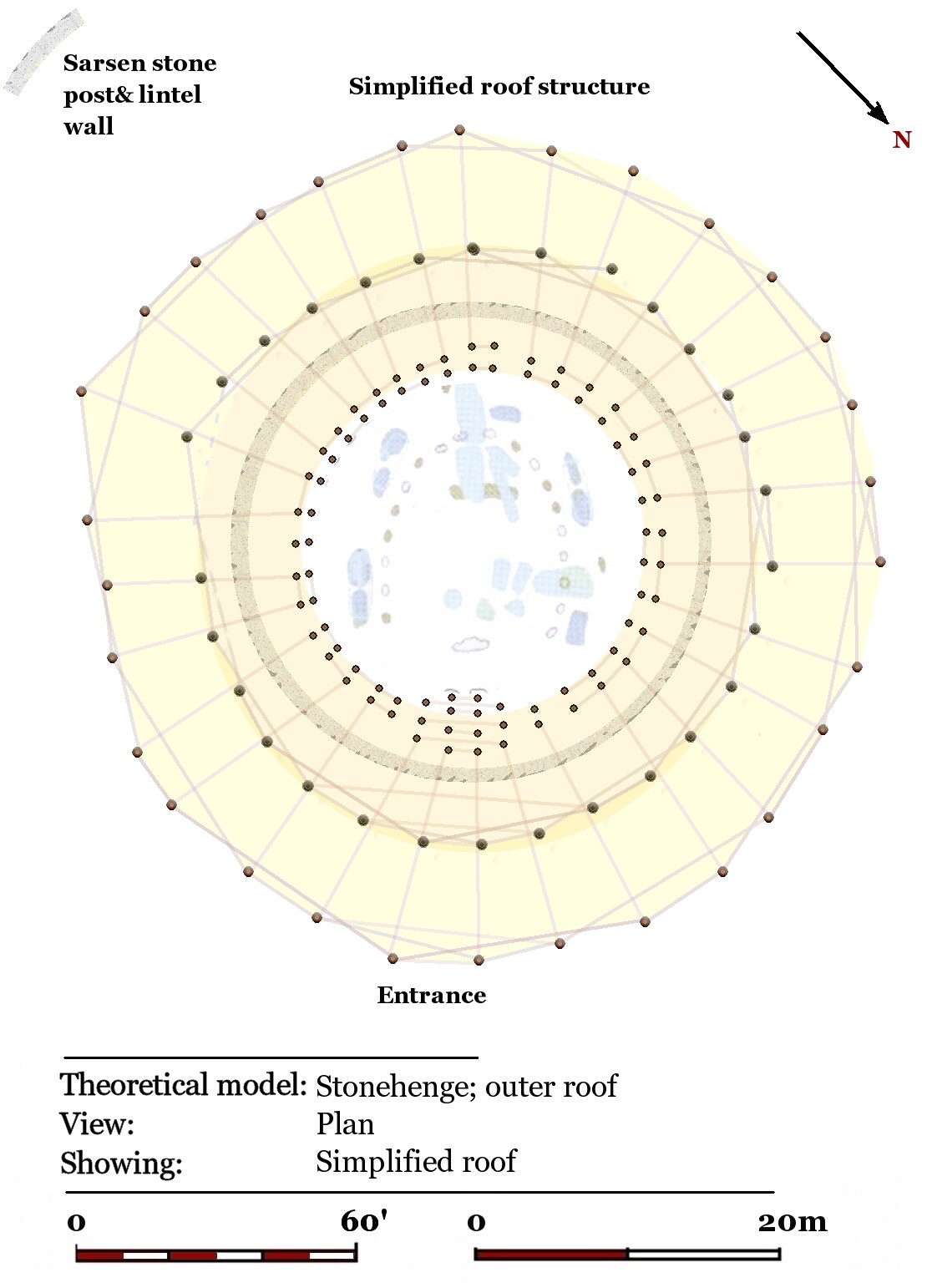
Stonehenge and the archaeology of the prehistoric roof


Postholes: cult or craft?
Most of the prehistoric archaeological sites of Britain, even Stonehenge, are covered with postholes, and it is my central contention that these posts were primarily the foundations of timber buildings. Further, since building is a rational process, postholes can be understood in terms of how posts were joined together to create roofed space.
Unfortunately, many academics have convinced themselves that some postholes are the product of a mysterious cult, whose rituals involved placing posts in the ground.
Despite considerable and ongoing research in this cult of postholes and their cosmology, the reasons for this strange behaviour are still not entirely clear. However, unlike the anthropomorphic polytheist religions evident elsewhere in Europe, adherents of these rituals, with remarkable prescience, seemed mainly to be acting out key themes from modern anthropology.

01 June, 2011

Is Post-processual archaeology a form of religion?

Anyone who has excavated a complex prehistoric archaeology site will have realised that they are quite difficult to understand. Some archaeologists, faced with deciphering this complex phenomenon, decided the easiest thing to do was abandon objectivity, go beyond the empirical limits of the evidence, and simply ‘make up’ something to explain it, redefining the terms of reference for archaeology to allow them to do this. For convenience, I will use the term ‘Post-processual for this new archaeology [1], although this term covers quite a wide and very complex can of worms.
Among university academics, these post-processual archaeologists are in the probably unique position of being paid to invent knowledge to cover those topics currently beyond our understanding, especially in those areas where objective knowledge is impossible. 
Traditionally, this is the province of religion, whose prophets have special insights beyond our shared objective reality, and whose texts can testify to events that transcend normal physical laws. While priests can report on opinions and beliefs of prophets, and even gods, at least they have some written records to work with; professors of prehistory can profess a detailed knowledge of the minds of people who left no records at all, and use it to explain the physical evidence.
Is it time to reclassify this form of archaeology as a religion, differentiated from mainstream scholarship, and fund it accordingly?

28 May, 2011

When on Google Earth 130

As the winner of Edith van den Burg's WOGE 129, identifying it as Halibiye, or Zenobia, in Syria, this is my challenge; be the first to identify the location and date of site in the picture below, and you can host you own When on Google Earth!

08 May, 2011

When on Google Earth 128

Unable to resist temptation any longer, I spotted Heather’s WOGE 127 identifying it as Corinth, Greece, and so now it’s my turn to set a puzzle; be the first to identify the location and date of site in the picture below, and you can host you own When on Google Earth!